Oral Health

Gum Disease Starts Quietly: What Happens When You Skip Your Dental Cleanings

April 14th, 2026

Average Read Time: 2 minutes

Gum disease is one of the most common dental problems, and it often begins when routine dental visits are delayed or skipped.

At first, the signs seem minor. You might notice a little bleeding when brushing or slight gum tenderness. For many patients in Lansing, MI, and nearby areas like East Lansing, Okemos, Holt, and Dewitt, it’s easy to put off a dental appointment, especially when life gets busy or other priorities take over.

But small delays can lead to bigger problems.

When you skip regular cleanings, plaque and bacteria continue to build along the gumline. Over time, this leads to gingivitis, the earliest stage of gum disease. At this point, the condition is still reversible with proper care. However, without treatment, it can progress into periodontal disease, a more serious condition that can cause gum recession, bone loss, chronic bad breath, and even tooth loss.

What started as something simple and preventable can quickly become more complex, more uncomfortable, and more expensive to treat.

At Dyras Dental, Dr. Dyras and her team focus on helping patients in the Lansing area stay ahead of these issues with comfortable, preventive dental care. Routine visits allow them to remove hardened buildup you can’t reach at home and identify early signs of gum disease before they worsen. These regular checkups are one of the easiest ways to protect both your oral health and your overall health.

Putting off dental care might seem harmless in the moment, but it often leads to more time in the dental chair later, along with higher costs and more involved treatments.

The best way to protect your smile is to stay consistent with preventive care and not wait until something feels wrong.

If you’ve been putting off your visit, now is the time to get back on track. Schedule your appointment with Dr. Dyras at Dyras Dental today and take a simple step toward long-term oral health.

Fluoride

July 16th, 2025

There has been a lot of talk in the news lately about fluoride in our water. Fluoride is an important mineral that is found naturally in our environment and has significantly reduced the risk of decay in our society since its levels started being maintained in our water supplies. It is also found in many toothpastes and mouthwashes, and our office has a fluoride application we can provide to help patients who are at risk of developing decay.

There are two ways for us to be exposed to fluoride – systemic and topical. Topical is generally the best route, as it goes directly on the tooth. Examples of topical fluoride would be from toothpaste and the fluoride varnish we provide in the office. Systemic fluoride would be fluoride that you ingest either from a fluoride supplement or from drinking tap water. This type of fluoride is important for children as their teeth develop so that the fluoride can be incorporated into their teeth. Systemic fluoride for children helps promote life-long resistance to decay.

Our fluoride varnish is effective for 3-6 months and should be reapplied at each hygiene visit to consistently lower your risk of decay. Patients who benefit from fluoride varnish would be any one who has had a cavity in the last 3 years, anyone who has a filling that goes between your teeth or has a crown on any of your teeth.
When getting the fluoride varnish in our office, it is important to not brush or floss for at least 4 hours. We also recommend avoiding hard, hot, or sticky foods while the varnish is on your teeth. It is definitely worth the wait as it can lead to less dental work in the future.

We recommend prescription level fluoride toothpaste for anyone who has had decay in the last 3 years. This is because it takes about 3 years to change the flora, or bacteria types, in our mouth from one that is making decay to one that is healthy. For everyone else, over the counter toothpastes that contain fluoride is acceptable preventative care.

Fluoride has been a great help for dental health over the years and will help keep you cavity free. If you have any questions about how fluoride can effect your dental health, please feel free to visit us or give us a call at (517) 485-1900.

Dentistry Frequently Asked Questions

May 21st, 2025

What is Dentistry?

Dentistry is the part of the medical health field that addresses oral health. The mouth can be a great indicator of how healthy your body is. We can detect signs of general health issues including diabetes, high blood pressure, inflammatory diseases, cancer, and sleep apnea. We assess and help improve the health of your gums, which are proven to be linked to general health issues. We can help detect issues with your teeth early to prevent the need for extensive treatment.  We replace teeth, fix teeth, and help keep them healthy.

What should patients look for when choosing a dentist?

Patients should look for a dentist who is willing to listen to them and involve them in choosing the best care options. There are lots of different ways to address oral health needs and it is important to have a guide to help find the best care for you. Our office utilizes photography to educate patients about their oral health needs and reviews pros and cons of each treatment option to help choose what works best for each individual patient.

Why is visiting the Dentist so important?

Dentistry is focused on preventative care.  In the medical field, many times patients are not treated until they already have a problem. Because we have the advantage of regular exams and radiographs, we can catch cavities and break down early and prevent them from spreading deeper or to other teeth.

How can patients maintain oral health between visits to your office?

Brushing their teeth twice a day for two minutes, and using either floss or a Waterpik to clean between the teeth at least once a day. This regimen will help maintain a healthy mouth and make hygiene visits more comfortable and enjoyable.

Why do patients need to see the dentist if they have braces?

Having braces on your teeth makes it much harder to properly clean and can make you more prone to gum inflammation. Having regular cleanings and check ups can keep your gums healthy and help prevent decay from forming around the brackets.

What is involved in the first visit?

During your first visit at Dyras Dental, we will give you a tour of the office and interview you to determine what your concerns are with your teeth and oral health. We then take a series of photographs and radiographs that help evaluate the state of your mouth. Dr Dyras will do a thorough exam of your jaw joint, chewing muscles, gums, tissues in your mouth and your teeth. Any findings that we have are reviewed with you using the photos that were taken so you can see what we are discussing. We listen to your concerns and feelings about what is being presented so that we can come up with a treatment plan that will achieve your goals.

What services do you provide and why should patients choose you for these services?

We provide a wide range of services, including care for jaw joint pain, bleaching, tooth bonding and white fillings, implants, dentures, veneers, root canals, bridges, crowns, treatment for gum disease.  Patients should choose our office because of our focus on quality care, patient service, and excellent communication. We go above and beyond to make sure that you get the treatment that you need in a comfortable environment.

What accreditations/certifications/awards/specializations for various types of dentistry have you received?

I have a Doctorate of Dental Surgery from Detroit Mercy School of Dentistry. I have been a Fellow in the Academy of General Dentistry since 2020.  I lead a study club for local area dentists and have taken extensive post doctorate classes through the Dawson Academy, Spear Education, and the American Academy of Dental Sleep Medicine. I am a member of the Spear Faculty club, as well as the Michigan Dental Association and the American Dental Association.

Why did you choose to become a dentist?

I chose to become a dentist because I loved working with my hands and wanted a career that melded art, health care and science. So much of dentistry is artistic, as every case is unique and no one solution will work for every patient. I enjoy general dentistry because I can get to know my patients and provide them with excellent comprehensive care that I can be proud of.


Brushing and flossing

October 21st, 2024

Daily oral care is an important part of maintaining your healthy mouth, and turning around the health of your mouth if you have active decay or gum disease. Our mouths naturally have millions of bacteria in them, some of them being beneficial to our health and others that can damage. The best way to encourage the “good bacteria” to grow, it is important to remove the plaque from our teeth that forms through out the day. The bacteria in our plaque are the kind that causes damage and inflammation in our mouth, and can lead to general health problems as well.

For gum disease, if the plaque on our teeth is not removed twice daily, more damaging bacteria will be able to start moving in and creating gum inflammation. If your gums bleed or are sore when brushing and/or flossing, this indicates that the inflammation is already there and needs to be addressed. Many of our patients prefer using a Waterpik as an alternative to flossing, especially when they have pain with flossing, as it can be more comfortable and can get between your teeth easier. Our patients who have started using Waterpiks usually have significant improvement in their gum health during their next hygiene appointment.

We recommend that our patients brush twice a day, once in the morning and once in the evening. Because we tend to produce less saliva at night, there is usually plaque build up when we wake in the morning. It is important to brush at night to remove any food particles, as well as plaque that has built up during the day from any sugary or acidic foods that have been eaten. It is important to floss or use your Waterpik once a day, ideally in the evening to help in removal of any food particles.

Both manual toothbrushes and electric toothbrushes can do a great job at maintaining the health of your teeth. We have found that patients have an easier time with electric tooth brushes, as it is easier to get enough brush strokes, and the electric toothbrushes have timers to make sure you are brushing long enough. It is easy to let your mind wander while brushing, so the electric tooth brushes can help with that as well!

At Dyras Dental, we recommend that patients brush twice a day for two minutes and floss or use a Waterpik once a day. If you have any questions about how you can improve your home care, call us today!

Preventative Care

January 18th, 2024

We are incredibly lucky in Dentistry as many of the diseases and causes of mouth pain can be prevented these days, as long as patients participate in regular preventative care. At Dyras Dental we pride ourselves on staying minimally invasive and doing everything in our power to prevent bigger issues down the road.

One of the ways we accomplish this is by providing regular cleanings and check ups for our patients. At your visits with our hygiene team every 4-6 months we perform a myriad of examinations and screenings to help identify issues early and address them before they become a more advanced problem.  Some of the diseases you will be screened for at your regular hygiene visit are: Periodontitis, Gingivitis, Cavities or Decay, Fractured or Cracked teeth, Oral Cancer, soft and hard tissue lesions, Calculus build up, signs of Sleep Apnea and Sleep Disordered Breathing and tooth wear.  When caught early, many of these issues have easy and minimally invasive solutions.  When not addressed, they can lead to bigger treatment needs and general health problems, especially inflammatory diseases like heart disease, diabetes and Alzheimer’s.

Once the hygienist has completed screening for all these issues, they will remove the plaque and calculus that has built up on your teeth since your last visit. Removing these deposits will aid in maintaining your gingival health and prevent inflammation in your mouth.  The hygienist will also counsel you on how you maintain your tooth and gum health at home and will suggest aids that will make your daily routine easier and more effective.

There are many things you can do at home to achieve and maintain oral health. One way is through your diet. Eating crunchy and fibrous fruits and vegetables like apples and celery help naturally remove plaque from your teeth while also supplying your body with the nutrients you need. Avoiding processed sugar and drinks that are high in acid and sugars will help keep your mouth healthy as well. Processed foods and added sugars make it easier for the bad bacteria in our mouth to create inflammation and decay.  Many foods are acidic, as they generally taste better. Whenever we eat, our mouth becomes acidic for about 20 minutes. If we snack or sip all day on processed foods or acidic/sugary drinks, our mouth will stay acidic all day and make it difficult for the good bacteria in our mouth to thrive. Some times giving up our favorite drinks and food is not a realistic option, but being strategic about when we eat them can help. If there is a food you want to be able to enjoy, it is probably safer having it only at meal times and sticking to tap water between meals to give your mouth a break.

One of our favorite tools for maintaining oral health is the Waterpik.  It is best described as a tiny pressure washer for your teeth. It can remove plaque and bacteria from your teeth up to 4 mm below your gums and is more effective than flossing. The best part is that our patients love using their Waterpiks and report that their teeth feel significantly cleaner after using it. The waterpik can be used 1-2 times a day and will make your dental check ups go smoother as it keeps your gums healthy and happy.

Our staff at Dyras Dental will go out of their way to help you achieve the healthy and bright smile that you deserve, and help you maintain it for a lifetime with proper preventative care. Call us today to schedule your next preventative appointment!

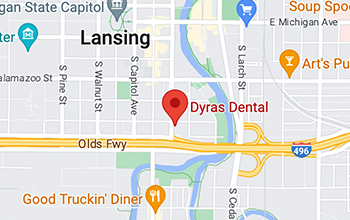
601 S Grand Ave, Lansing, MI 48933 (517) 485-1900
Monday — Thursday 8:00am to 5:30pm Friday: CLOSED
map of Lansing, MI
Contact Us!
call email